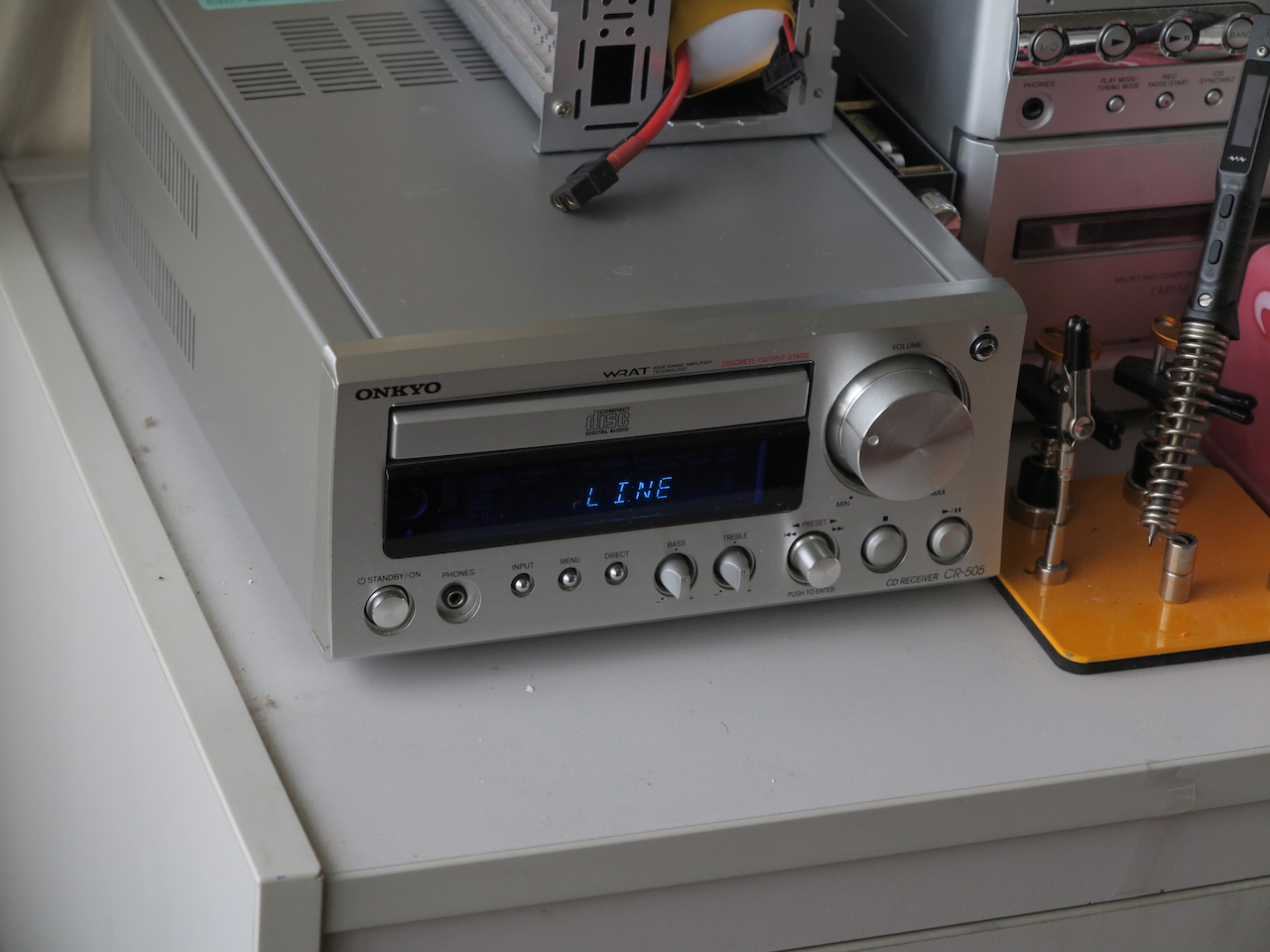
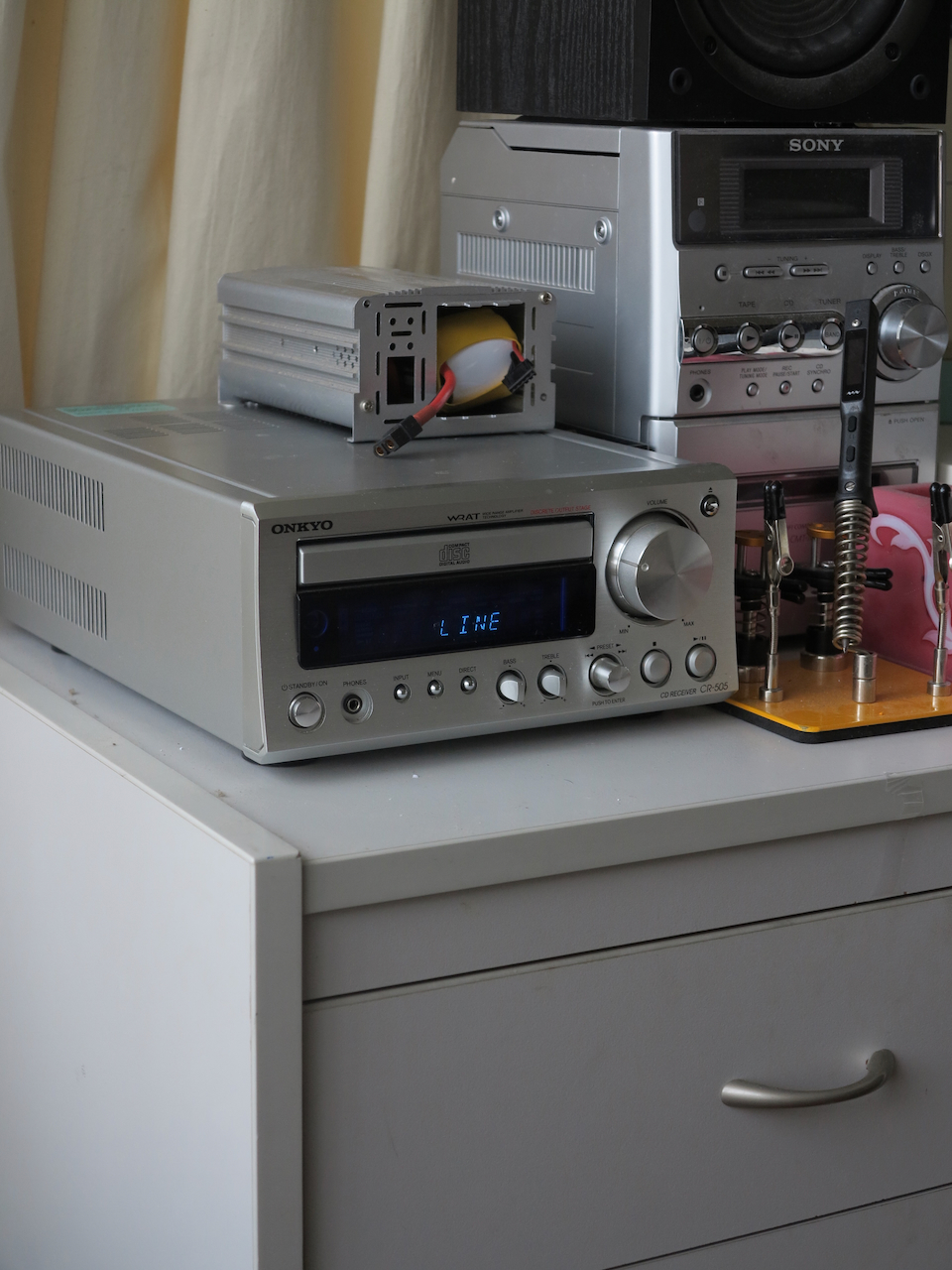
Fixing an old amp
Troubleshooting an Onkyo CR-505
April 9, 2026I found an old amp sitting in our garage, and the sound quality was supposed to be quite good, so I decided to try and fix it. The reason it got thrown out was because the right speaker was cutting out intermittently. After some google searches, I found the problem likely stemmed from ageing relay contacts, oxidated from sitting in the garage for so long, and the thermal expansion from light usage forcing the relay contacts apart.
To test this theory, I just waited for the sound to cut out, and cranked the volume up for a second or two. This temporarily fixed the issue, and I think it’s because of the higher voltage being able to force its way through the oxidation and form a conductive path.
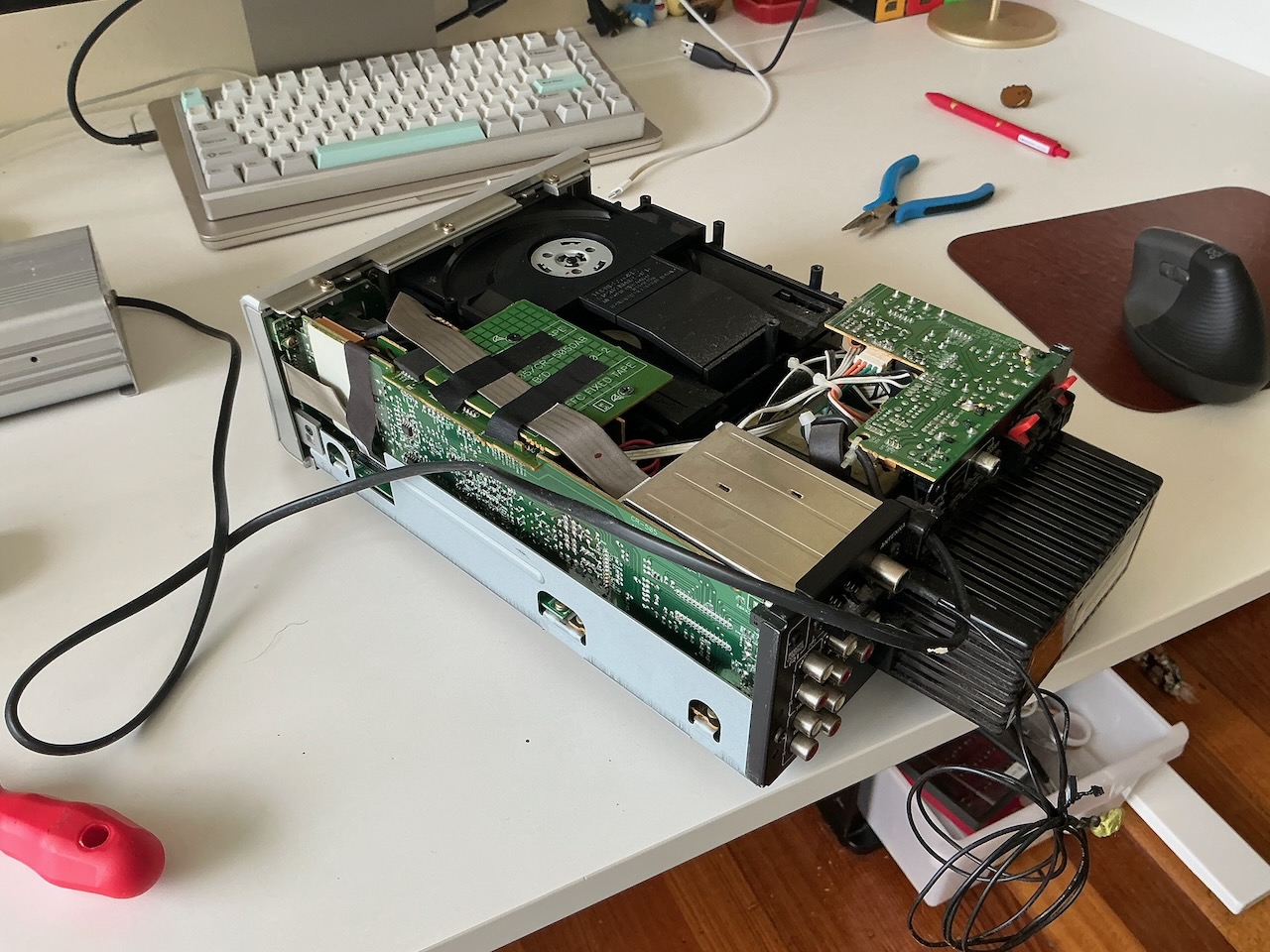
Now that the problem was isolated to the relay, the only option left was to replace it.
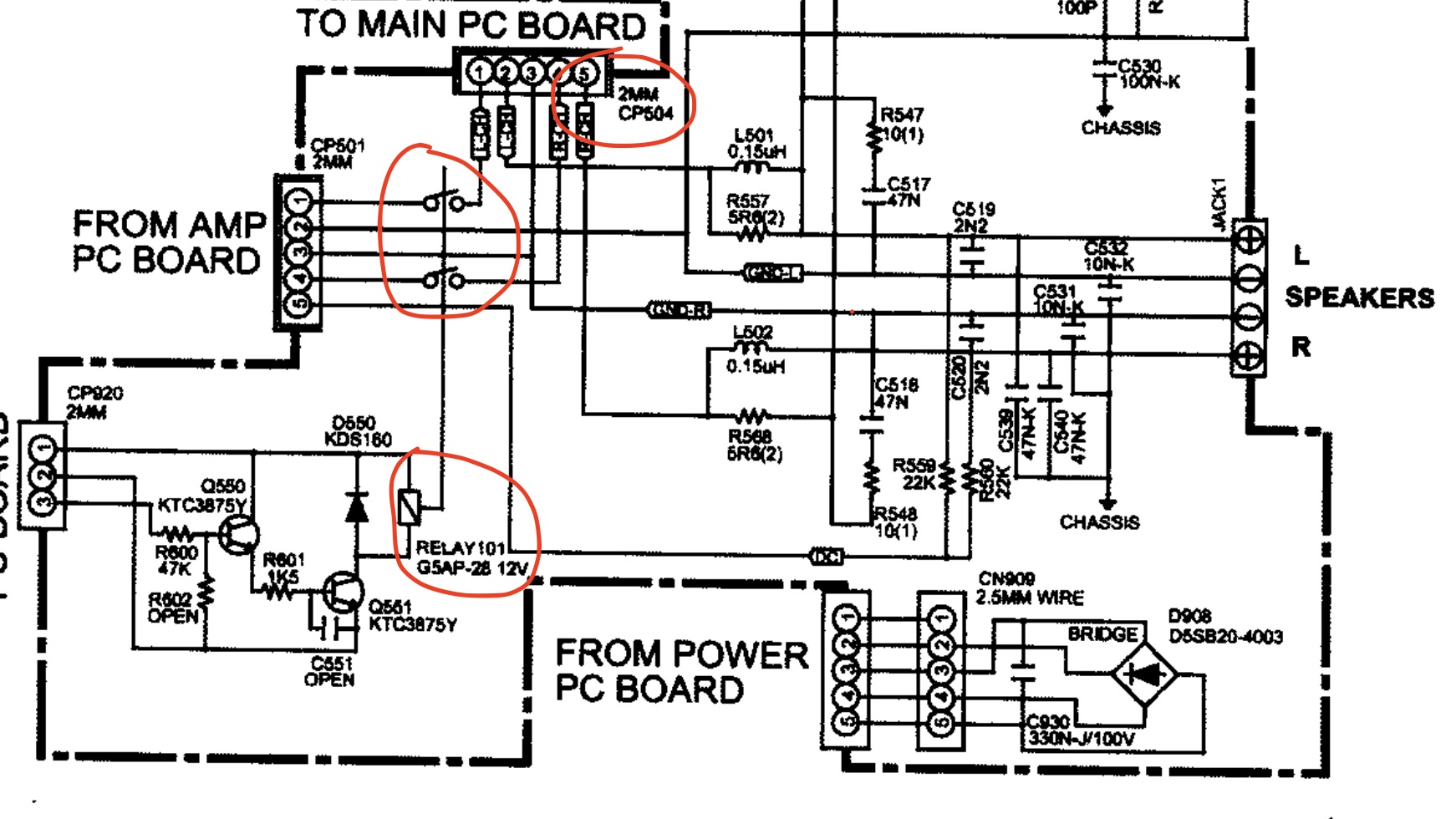
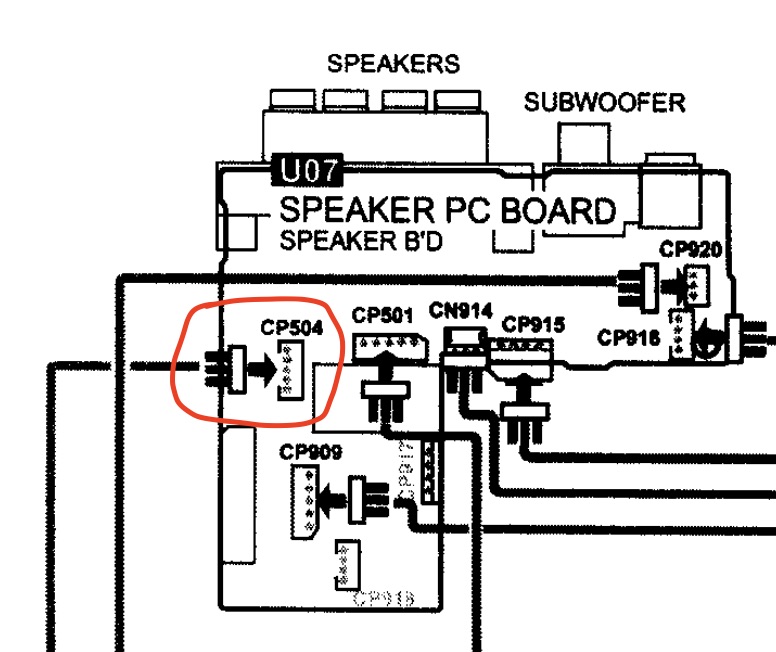
Above, we can see the schematic (“service manual cr-505”) for the circuit connected to the speaker out terminals.
RELAY101 is one of two relays in this entire amp, the other is irrelevant. We can see that RELAY101 is connected to the CP504 connector. RELAY101 controls the path of pin 1 and pin 4 of the CP504 connector.
Note that pin 2 and pin 5 of said connector links to the right and left speakers.
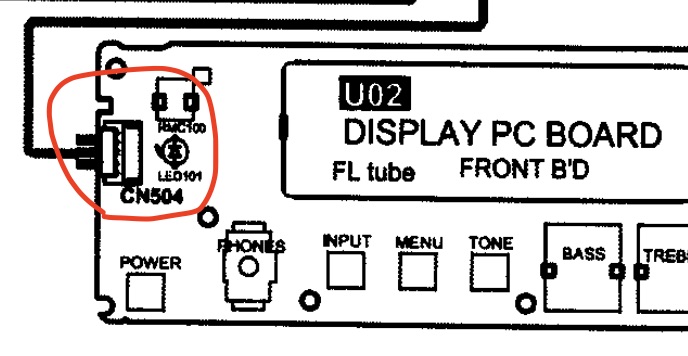
Searching for the corresponding connector leads us to the U02 display board.
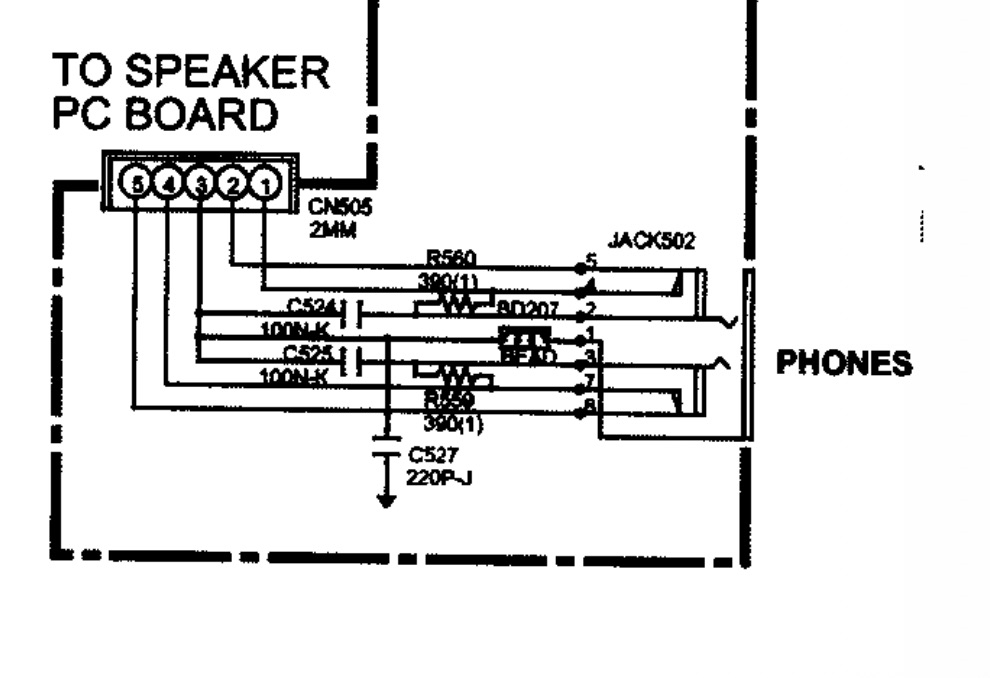
Above is a section of the U02 board. CN505 is the closest match to what we were looking for above.
If we follow the line out from pin 1, we see that (ignoring the PHONES stuff) it links straight up to pin 2. Likewise for pin 4, it links to pin 5. Thus, the relay is effectively controlling whether any signal gets out to the left and right speakers, explaining the issue before. The relay contact for the right speaker was oxidised, and no signal was able to reach the right speaker.
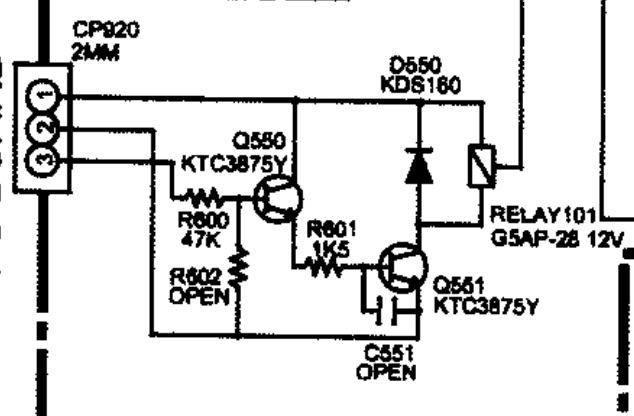
Again looking at RELAY101, it is linked to a current amplifier, which gemini says “allows a very weak control signal to safely actuate a heavier mechanical relay”. Overall, we can reasonably say that the relay is on (switches is in the closed state) when the amp is on/playing music. I think that it’s just a double check or redundancy to make sure the speaker isn’t playing straight noise or interference when the amp first turns on.
Anyhow, the relay doesn’t have to be replaced, and the switch can just be hot wired into a closed state.
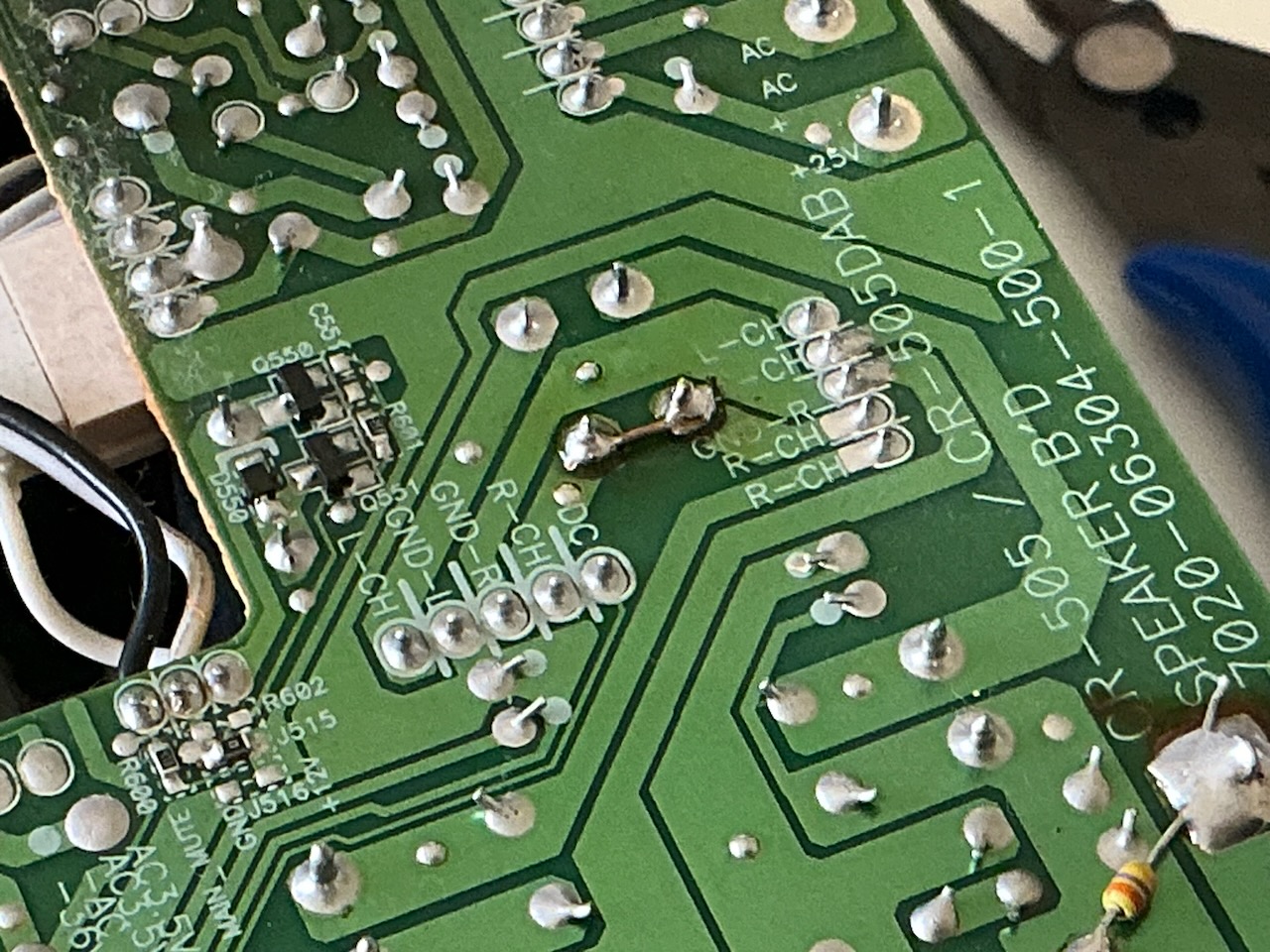
Like so. R-CH is shorted (via the little copper wire) to the corresponding R-CH, bypassing the shit contact.
We end up with a perfectly repaired, beautiful amp.